India has over 500 million gamers. The global industry knows this. It's known for years, and it's responded the way extractive industries always do. Take what's useful. Leave the rest.
What's useful, apparently, is the mythology.
Ramayana and Mahabharata are two of the most structurally complex narrative systems ever built. Morally ambiguous characters. Multi-generational consequence. War as philosophical argument. The Kurukshetra battlefield runs deeper than most Western RPG quest lines combined.
The games industry found the bow and the chariot. It left everything else on the table.
Western-made games reduced Kali to a roster slot. Mobile games run Diwali events in October and forget India exists in November. Take the surface, build the IP somewhere else, collect the revenue from the market you borrowed from.
India's own studios have largely been on the other side of this equation. World-class execution talent. Significant outsourcing capacity. The credits on AAA Western titles are full of Indian names. The IP belongs to someone else.
This is changing. And the speed is picking up.
The question for anyone building in this space now is what "changing" actually means. A more Indian-looking game is a costume change. What matters is something structurally different.
Culture as load-bearing structure
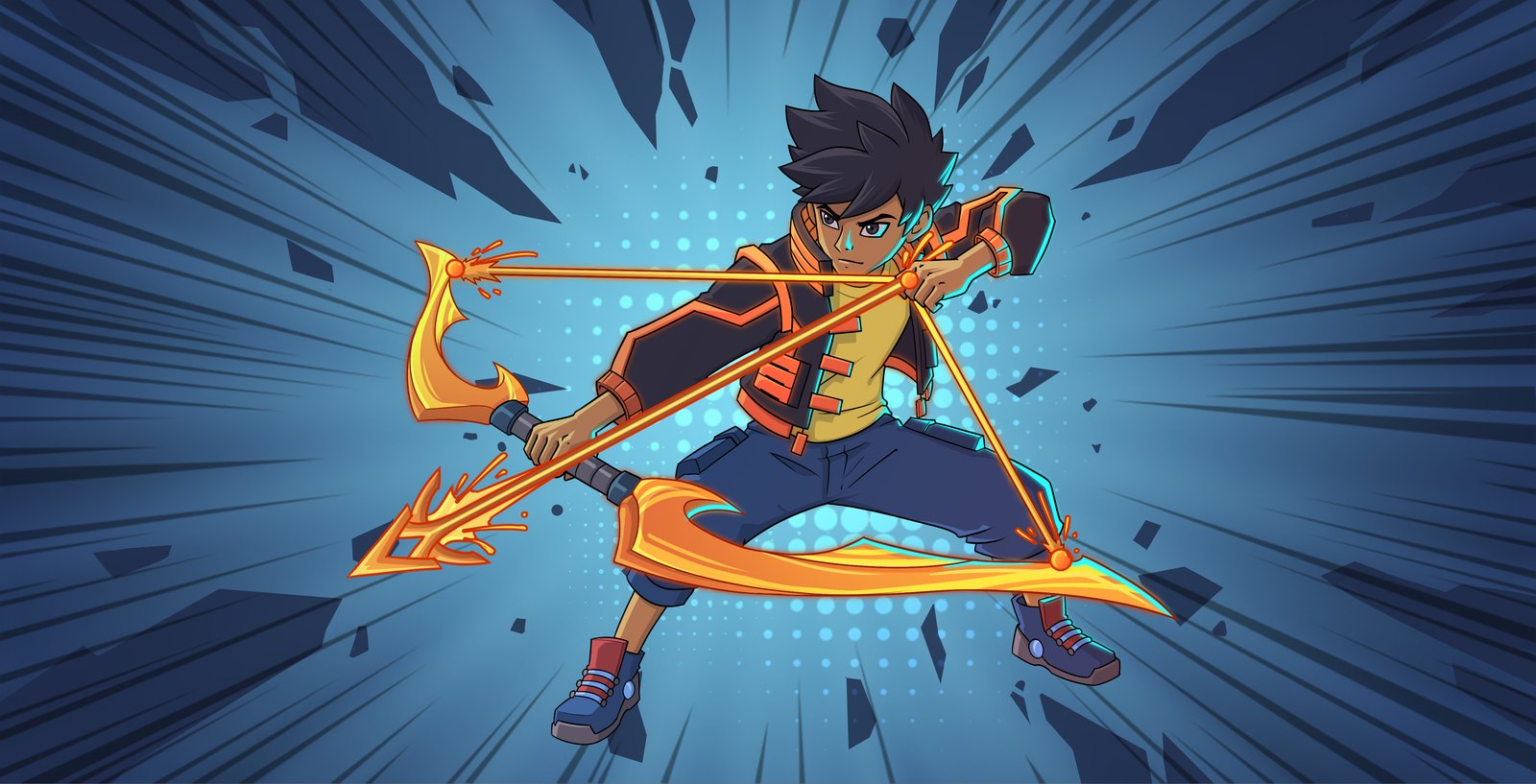
At Gameshlok we're building Alleymental. A 2D Metroidvania set in a handcrafted modern India. The mythology, the visual language, the music, the way the world is structured and revealed. All of it comes from inside the culture.
The Metroidvania form is relevant here because the genre runs on layered depth. Things that only make sense once you've earned the context to understand them. That's not a design choice we imposed on Indian mythology. That's just what Indian mythology actually is.
Consider how the Ramayana actually works. It doesn't hand you the moral on page one. A character's decision in one book reshapes the meaning of an event several books later. Rama's exile reads as misfortune when it happens. By the end it reads as the mechanism that makes everything else possible. The structure withholds meaning until you've earned the context to receive it. You don't understand the early chapters until you've finished the late ones, and then you reread the early chapters and they're different.
The Mahabharata pushes the same structure further. Karna enters as an antagonist, and only later context reveals the man underneath. By the time he dies, the moral weight has inverted. The text never changed. Your context did. These stories were built to be reread.
That is exactly how a Metroidvania works. You pass through a locked room early and it means nothing. You return six hours later with a new ability and the room transforms. Same room. New context. The early area you ignored is now the shortcut you needed. The genre is built on the player carrying forward knowledge that retroactively rewrites what came before.
We didn't pick the Metroidvania genre and then look for a culture to dress it in. We started with how Indian storytelling actually works and found a genre whose mechanics already mirror it. The match wasn't a coincidence. Both systems reward the same thing: patience, return, re-examination.
The difference between flavor and foundation
Most games that reference India use it as a skin. A texture pack. Swap the temple art for a cathedral and the game plays identically. Nothing in the design depends on India being India.
Culture as foundation means it shapes the load-bearing decisions. How the world is built. How movement works. How the story holds together. It's the difference between a game that has Indian elements and a game that could only have come from inside India.
Take combat. The elemental system we're building is drawn from Indian classical philosophy: earth, water, fire, air. In Western elemental systems, the logic is rock-paper-scissors. Fire beats ice. Water beats fire. Flat counters, designed for balance.
The Indian framework isn't built on counters. It's built on cycles of creation and dissolution. Earth erodes under water. Water evaporates under fire. Fire scatters in air. Air settles into earth. Nothing wins. The loop just keeps turning.
That changes how the combat plays. You're not picking the one element that beats the enemy and waiting for a cooldown. You're chaining all four in sequence, each one setting up the next, the combo carrying its own momentum the way the cycle does. Stop chaining and you fall out of rhythm. Remove the Indian framework and the system stops making sense. It isn't a reskin of something that already existed. The mechanic and the philosophy are the same thing.
That's what "structural" means. The culture isn't decoration. It's the reason the game works.
What this means for the market
The industry has had access to one of the richest narrative traditions in the world for decades. Most of it has been used for boss designs and seasonal events.
India's gaming market hit $3.8 billion in FY24, with projections to $9.2 billion by FY29, according to Lumikai's annual report. The mobile-first wave built the audience. What comes next is the part that matters: original IP, built from inside the culture, designed for players who grew up in it and exported to everyone else because the work is genuinely good.
The pattern is familiar. It has happened three times already.
Korea did it in the 2000s. NCSoft and Nexon built MMOs rooted in their own design sensibility and exported them worldwide. Lineage and MapleStory weren't Western games with Korean text. They were structurally Korean, and that's why they traveled.
Japan did it again with Sekiro. FromSoftware had already broken out with Dark Souls, but Dark Souls borrowed European medieval aesthetics. Sekiro went the other way. Sengoku-era Japan, Buddhist mythology, a poise-and-posture combat system rooted in the logic of a sword duel rather than a hit-point bar. It was the most culturally specific thing they'd made and it won Game of the Year.
Poland did it with The Witcher. CD Projekt Red adapted a Polish novel steeped in Slavic folklore, kept the moral ambiguity that Western RPGs had sanded off, and built a studio that put Poland on the global map. The Witcher 3 didn't succeed despite being Slavic. It succeeded because it was.
In each case, the breakout came when a team stopped adapting Western templates and started building from their own ground. The local specificity wasn't a limitation. It was the product.
India is next. The talent is there. The audience is there. The mythology is deeper than the industry has ever used. What's been missing is the conviction to treat the culture as the foundation, not the flavor.
That conviction is the whole bet at Gameshlok. The next post will show what that looks like in practice.